


Zhao Keli from the Institute for the Control of Agrochemicals led a team to investigate the development of the Long-Lasting Insecticidal Nets (LLINs) industry and coordinated efforts to solve the problem of export obstruction.
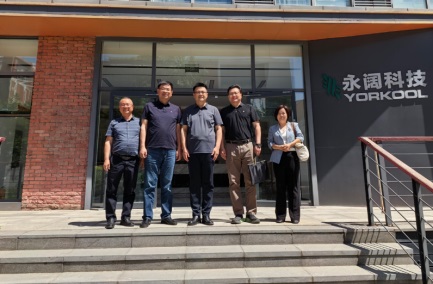
On June 3, 2025, Zhao Keli, Deputy Secretary of the Institute for the Control of Agrochemicals, Ministry of Agriculture and Rural Affairs, P.R.China, led a team to Tianjin Yorkool Science & Technology Co., Ltd. to conduct on-site research on the problem of the blocked export of Long-lasting Insecticidal Nets, understand the crux of the enterprise's predicament, take practical measures to help the enterprise out of difficulties, and promote the high-quality development of the Long-Lasting Insecticidal Nets industry.
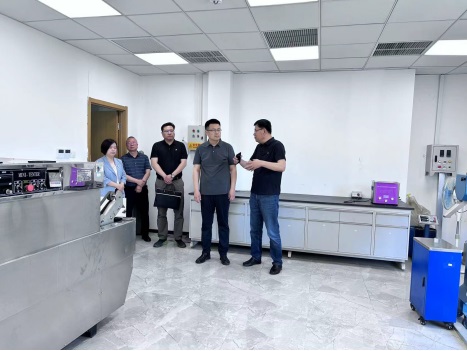
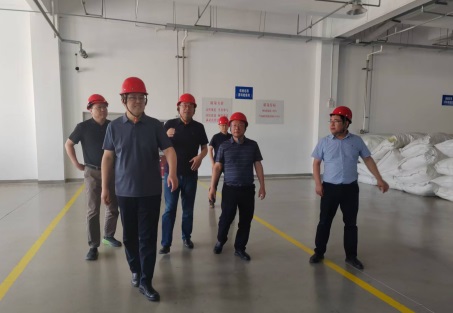
Zhao Keli and the research team successively visited the R&D department and GLP (Good Laboratory Practice) laboratory of Tianjin Yorkool Science & Technology Co., Ltd., as well as the warehouse and production workshop of Yorkool Chemicals (Cangzhou) Co., Ltd. They listened to the situation briefings by enterprise leaders, detailedly understood the overall development of the Long-lasting Insecticidal Nets industry and the recent causes of export blockages, and actively coordinated to promote problem-solving.
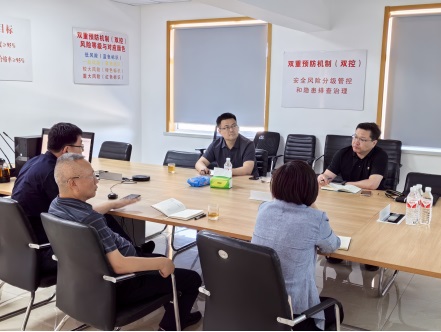
Zhao Keli pointed out that the current development of China's pesticide industry is in a critical strategic opportunity period for transformation and upgrading. It is necessary to always adhere to building a high-level socialist market economic system, give full play to the decisive role of the market, better exert the role of the government, achieve high-level scientific and technological self-reliance, promote high-level opening-up, especially institutional opening-up in rules, standards, etc., promote the extension of the industrial chain of China's pesticide industry, increase added value, gradually reduce the proportion of intermediate and technical material (TC) exports, encourage overseas independent registration and self-owned brands, encourage formulation exports, encourage service trade, track the situation of pesticide foreign investment, and pay attention to the real reasons and demands behind it. It is necessary to better coordinate the domestic and international markets, and continuously promote the high-quality "going global" of Chinese pesticides on the premise of ensuring food security and domestic pesticide supply.
Zhao Keli noted that after more than a decade of development, relying on policy support and the strong supporting capabilities of China's industrial chain, China's long-lasting insecticidal nets have formed a relatively complete industrial chain including innovative R&D, qualification certification, production, trade, and sales, occupying an important position in the global market dominated by single procurement from international organizations. This not only has made Chinese contributions to solving public health problems such as malaria in Africa and other regions but also effectively promoted pesticide trade and industrial development in this niche field. According to statistics, international organizations procure approximately 200 million nets annually, with a procurement value exceeding 400 million U.S. dollars. Chinese enterprises represented by Yorkool have deeply cultivated this niche track, accounting for 60-70% of the market share.
Zhao Keli stated that enterprises have achieved remarkable achievements, leveraging the advantages of both technological innovation and market terminals, and their sustainable competitive advantages remain obvious. Regarding the export obstacles encountered by enterprises since this year, ICAMA will, based on its own responsibilities, consider what enterprises consider and urge what enterprises urge, actively promote and help resolve them as soon as possible. The specific work, preliminary schedule, and roadmap were clarified and arranged on the spot at the research symposium.
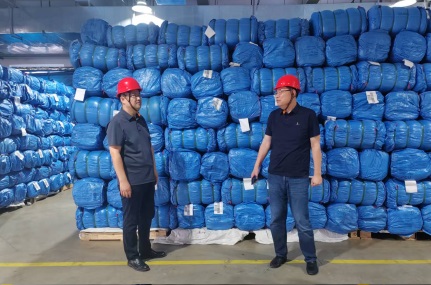
Zhao Keli emphasized that at present, all cadres and staff of the Institute are earnestly carrying out the study and education on the spirit of the Central Eight-point Regulations in accordance with the unified arrangements of the Central Committee and the Party Group of the Ministry of Agriculture and Rural Affairs. The purpose of the study and education is to effectively change work styles, take the initiative to assume responsibilities, and not only maintain a clean and pure relationship with enterprises but also take the initiative to approach enterprises to help solve their practical difficulties and problems. We will further transform work styles in the study and education, focus on the actual development of the industry, highlight problem orientation, and take the actual effect of serving enterprises as the test of the practical results of the study and education. Bai Xiaoning from the International Department of ICAMA participated in the research activity.
